Navigating the nuances of digital shorthand often leads to confusion when familiar acronyms appear in unexpected places.
You might find yourself wondering what does DMV mean in text when a message pops up that clearly has nothing to do with a government vehicle office.
While the Department of Motor Vehicles is the most common association for the acronym, digital slang has repurposed these letters for entirely different meanings depending on the platform and the social circle involved.
Understanding these shifts is essential for maintaining clarity in modern communication, as terms frequently evolve to suit the specific needs of casual messaging, social media interactions, and even regional identification within online conversations.
The Primary Meaning and Definition of DMV in Digital Slang
When someone uses the acronym in a casual text, it almost never refers to the bureaucratic office where you renew your driver’s license.
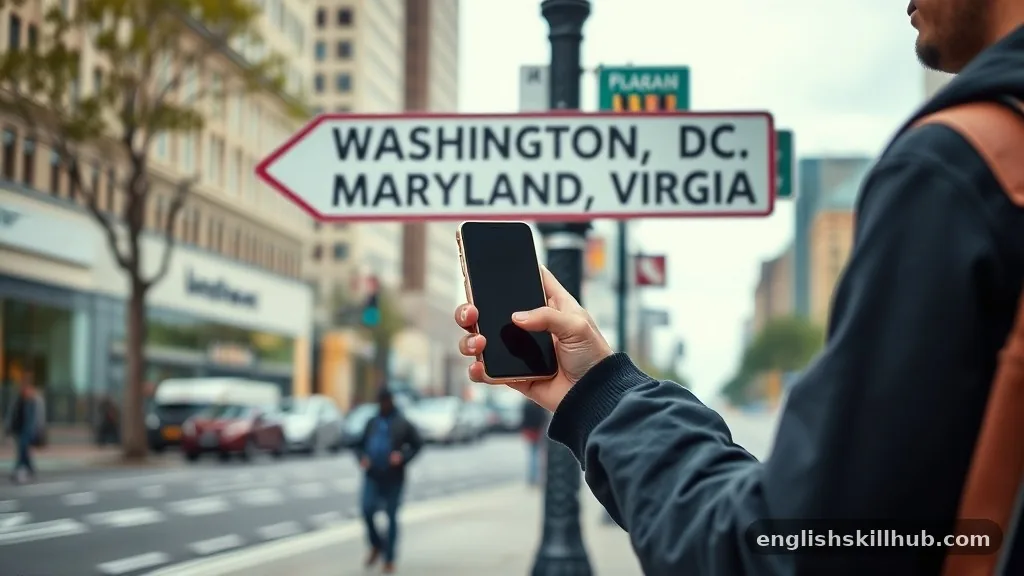
In the context of modern social media and direct messaging, DMV is most frequently used as a geographical shorthand referring to the D.C., Maryland, and Virginia metropolitan area.
Residents of this region often identify themselves as being from the DMV, and it serves as a common way to establish location-based identity during a conversation.
Beyond the regional definition, you might encounter the term used in more playful or slang-heavy settings.
In some niche subcultures, it can stand for something entirely different, such as a shorthand for a specific action or a descriptor for a person‘s vibe.
However, the geographic definition remains the most dominant form of the acronym outside of its official government usage.
Because of this, when you see it in a text, your first instinct should be to consider whether the sender is talking about their location.
If the context doesn’t fit the geography of the Mid-Atlantic, the sender might be using a localized or private slang term known only to their specific friend group.
Background and Origin of the Acronym
The transformation of the acronym from a government entity to a regional identifier is a fascinating study in linguistic drift.
The term was popularized in the late 1990s and early 2000s, largely driven by the hip-hop scene and local culture within the Washington, D.C. area.
As artists and residents sought a way to collectively represent the tri-state area, they adopted the existing government acronym as a convenient, catchy label for their home turf.
Over time, this usage spread from local music and street culture into mainstream digital discourse. As social media platforms began to prioritize location-based tagging, the term became a standard way for people to filter their online interactions.
It essentially allowed individuals to signal their proximity to others without having to list three separate states.
This evolution demonstrates how acronyms are often co-opted by communities to streamline communication and build a sense of shared identity, effectively stripping the original administrative meaning away in favor of a more personal, cultural significance.
Usage Across Different Communication Channels
How the term is interpreted depends heavily on the platform where it appears. In a professional email, if you see the letters, it is almost certainly a reference to an appointment or a regulatory requirement involving the Department of Motor Vehicles.
Conversely, in a casual text chain or a comment section on a social app, the likelihood that it refers to the D.C., Maryland, and Virginia region is significantly higher.
The following table highlights the disparity in how the term is typically interpreted depending on the environment:
| Context | Common Interpretation | Likely Intent |
|---|---|---|
| Professional Email | Government Office | Logistics/Documentation |
| Social Media Post | Geographic Region | Identity/Location |
| Casual Text | Geographic or Slang | Community/Reference |
| Dating App Bio | Geographic Region | Proximity/Matching |
Understanding these distinctions helps prevent awkward misunderstandings. When you see someone mention they are going to the DMV in a text, you must look at the surrounding words to determine if they are complaining about a long line at a government building or if they are simply heading to a party or event within the D.C. metropolitan area.
Nuances on WhatsApp, Instagram, and TikTok
Platforms like TikTok and Instagram have accelerated the use of the term as a badge of honor for people living in the region.
On these apps, users often put #DMV in their bios or captions to connect with others from the same area.
It acts as a digital beacon for local networking. On WhatsApp, the usage is often more intimate; it is used in group chats to coordinate meetups or discuss local news specific to the tri-state area.
TikTok, in particular, has seen the term used in various skits and commentary videos. Creators from the region often highlight the unique local culture, and the term serves as a shorthand for the specific set of experiences—like the local traffic, the regional dialect, and the food culture—that people in that area share.
If you are watching a video about regional quirks, and the creator mentions the letters, they are almost exclusively speaking to that specific geographic identity.
Technical and Specialized Interpretations
While the geographic and government meanings are the most common, the acronym can occasionally appear in technical or specialized fields.
For instance, in some engineering or physics contexts, it might serve as an abbreviation for specific measurement variables or mechanical components, though this is rare and highly dependent on the specific industry.
For example, in certain specialized manufacturing processes, it might stand for a specific valve or motor component, though these are typically defined within the internal documentation of that field.
In the medical field, while less standard, some practitioners might occasionally use shorthand in internal notes, though this is discouraged due to potential confusion with the government office. However, it is essential to distinguish between these highly specialized, niche uses and the common slang found in daily texting.
You can find more information on how acronyms are standardized in technical writing through resources like the National Institute of Standards and Technology, which provides clarity on official abbreviations.
Common Misconceptions and Errors
One of the biggest misconceptions is that the term carries a single, universal meaning. People often assume that because they have only ever seen it used for the licensing bureau, it must mean the same thing in every conversation.
This leads to humorous but sometimes frustrating misunderstandings, especially when a person from the D.C. area mentions their home to someone from a different part of the country.
Another common error is assuming that the term is always a noun. In some slang contexts, it can be used as a descriptor, though this is less frequent.
People also often mistake the acronym for other similar-sounding abbreviations, such as those used in gaming or specific online hobbyist communities.
When you encounter the term, it is always safer to ask for clarification if the context is ambiguous.
Similar Terms and Alternatives
There are many other ways people signify their location or their status in a text message. If someone wants to express that they are from a specific city, they might use the city’s airport code or a local nickname.
For example, those in New York might use “NYC,” and those in the San Francisco Bay Area often use “the Bay.” These terms function exactly the same way as the regional acronym, serving as a shorthand for a complex geographic identity.
If you are looking for alternatives to using the acronym in your own messaging, consider the following:
Using these alternatives can make your communication much clearer, especially when you are speaking with someone who does not live in that part of the country.
Appropriate Responses to the Term
How you respond depends entirely on whether you understand the context. If you know the person is from the D.C. area and they mention it, a simple acknowledgment is usually sufficient.
You could ask about their specific city or mention something you know about the region. This builds rapport and shows that you are listening.
If you are genuinely confused about what the person meant, it is perfectly acceptable to ask. A simple, “Are you talking about the area near D.C. or something else?” is much better than pretending to understand and responding with something irrelevant.
Most people are more than happy to clarify their slang, as they often forget that not everyone is familiar with the specific terms they use in their daily social circles. Being open about your confusion is a sign of good communication skills, not a lack of knowledge.
Distinguishing DMV from Similar-Sounding Terms
The acronym is often confused with other three-letter combinations, particularly in the world of online gaming or technical jargon.
For instance, players might use abbreviations that look similar but have entirely different meanings related to game mechanics or character classes. The key to distinguishing these is to look at the tone of the message.
If the conversation is about logistics, travel, or government services, it is almost certainly the licensing office. the conversation is about social plans, travel to a specific city, or regional pride, it is the geographic area.
If the conversation is highly technical, academic, or related to a specific hobby, it might be a specialized acronym.
Paying attention to the context of the conversation is the most effective way to separate these terms from one another.
Do not rely on the letters alone; the surrounding words will always provide the clues you need to decode the message accurately.
The Relevance of the Term in Modern Online Conversations
In the world of dating apps and social networking, the term plays a significant role in how people connect. Location is often the first thing people filter for, and being able to identify your geographic area quickly is a high priority.
This is particularly important in areas with high traffic and long commute times, like the D.C. metropolitan area. Knowing that someone lives in the same region is a huge factor in whether a connection is feasible.
As digital communication continues to favor efficiency and brevity, terms like this will remain essential tools for navigating social spaces.
They allow us to condense complex information into a few characters, saving time and helping us find the people who share our local reality. Understanding these terms is just one small part of being a savvy digital communicator in a fast-paced environment.
Final Thoughts on Digital Shorthand
Mastering the meaning of digital shorthand is vital for staying connected in our fast-paced online world. When you encounter terms like the one discussed here, remember that context is the most reliable indicator of intent.
Whether you are navigating regional identity or administrative logistics, taking a moment to consider the environment of the conversation will save you from unnecessary confusion.
By staying curious and asking for clarification when needed, you ensure that your digital interactions remain meaningful and clear.
FAQs
1. What does DMV mean in text?
DMV usually means Department of Motor Vehicles. It refers to a government agency that handles driver’s licenses, vehicle registration, permits, and related services. The exact meaning can depend on the context.
2. What does DMV mean in a text message?
In a text message, DMV most commonly refers to the Department of Motor Vehicles. Someone may use it when talking about a driver’s license, car registration, or a DMV appointment.
3. Can DMV have another meaning in texting?
Yes. DMV can have different meanings depending on the conversation. However, when discussing driving, cars, licenses, or registration, it usually means Department of Motor Vehicles.
4. What does DMV mean on social media?
On social media, DMV can refer to the Department of Motor Vehicles. In some contexts, especially when discussing locations, DMV can also refer to the D.C., Maryland, and Virginia area.
5. Is DMV an abbreviation or slang?
DMV is mainly an abbreviation, not traditional texting slang. Its meaning depends on the context in which it is used.
Conclusion
The meaning of DMV in text usually depends on the conversation. Most often, DMV stands for Department of Motor Vehicles, especially when people are talking about driver’s licenses, vehicles, registration, or driving tests.
In conversations about locations, DMV can also mean the D.C., Maryland, and Virginia region. Looking at the surrounding words can help you understand which meaning the sender intended.