If you have ever found yourself staring at your phone screen wondering what do wtw mean in text, you are certainly not alone.
Digital shorthand evolves at a breakneck speed, often leaving even the most frequent texters feeling slightly out of the loop.
This common acronym frequently pops up in casual messaging, social media comments, and dating app interactions, usually serving as a quick way to initiate a conversation or check in on a friend‘s plans.
By understanding the nuances of this specific piece of internet slang, you can better navigate the informal tone of modern digital communication and ensure you never miss the intent behind a message again.
Defining the Core Meaning of WTW
At its simplest level, the acronym WTW stands for “what’s the word?” or “what’s the move?” It is a casual, low-stakes way for someone to check in on your status, gauge your availability, or ask about your current plans.
When you receive a message containing this abbreviation, the sender is essentially inquiring about what is happening in your life or whether you have any interesting activities lined up.
It functions as a conversational bridge, designed to break the ice without requiring a formal introduction or a long-winded explanation.
Because it is rooted in oral tradition and slang, the meaning can shift slightly depending on the relationship between the two parties.
In some cases, it acts as a direct substitute for “what are you doing?” while in others, it implies a call to action, such as wanting to meet up or coordinate a hangout.
The flexibility of the term is precisely why it remains so popular; it is short, efficient, and requires very little effort from the recipient to understand.
When you encounter it, you should view it as an open-ended invitation rather than a demanding interrogation.
The Background and Evolution of Digital Shorthand
The rise of acronyms like this one is a direct reflection of how technology has compressed our communication styles.
As mobile devices became the primary method for staying in touch, the need for brevity became paramount.
Typing out full sentences on early T9 keypads or even modern touchscreens can be tedious, so users naturally gravitated toward shortening phrases to their essential letters.
This linguistic phenomenon is not new, but the speed at which these terms spread across the internet has accelerated significantly over the last decade.
Many of these abbreviations originate from African American Vernacular English (AAVE) before migrating into mainstream internet culture through social media platforms like Twitter and Instagram.
Once a phrase gains traction in a viral post or meme, it is quickly adopted by a wider audience who appreciate its efficiency.
The term in question likely followed this path, moving from specific regional dialects into the general lexicon of digital natives.
Understanding this history helps clarify why these terms often feel like a “secret code” to those who are not actively engaged in the specific subcultures where they first gained popularity.
Usage Across Different Communication Channels
The way this acronym is used varies significantly based on the platform and the social setting. In a casual chat with a close friend, it is almost always interpreted as a friendly check-in.
You might see a message that simply says “wtw?” followed by a planned activity for the evening.
In this context, the sender assumes a shared level of intimacy where they do not need to be overly polite or formal.
It is a shorthand for comfort and familiarity, signaling that the two individuals are on the same page regarding their social calendar.
In contrast, using this term in a professional field or a formal setting is generally discouraged. Because it is highly informal, it can come across as unprofessional or lazy if sent to a colleague or client.
However, in modern, fast-paced work environments that rely on tools like Slack or Microsoft Teams, team members who have developed close working relationships often adopt this slang to facilitate quick, informal check-ins during the workday.
The key is to gauge the existing rapport; if you wouldn’t use casual slang in person, you shouldn’t use it in a professional text.
- Casual text with friends: Used to ask about plans or check on their mood.
- Social media comments: Used to acknowledge a post or express interest in an event.
- Dating apps: Used to initiate a conversation or propose a spontaneous date.
- Professional settings: Generally avoided, unless the workplace culture is extremely relaxed.
Nuances in WhatsApp, Instagram, and TikTok
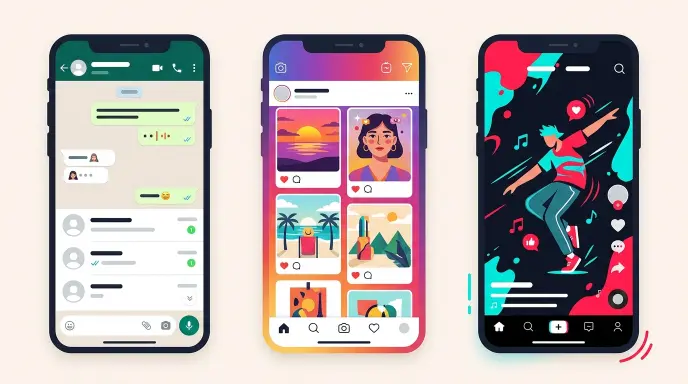
The platform you are using can drastically change the implied meaning of this acronym. On WhatsApp, which is primarily used for direct, one-on-one communication, it is usually a personal inquiry.
The sender is likely looking for a specific response regarding a plan or a piece of news. Because WhatsApp is often used with people you know well.
The term carries a heavier weight of expectation; the sender usually expects a reply that moves the conversation forward toward an actual meeting or a shared activity.
On Instagram and TikTok, the usage is much broader and often more performative. You might see “wtw” in the comments section of a post, where it functions as a way to engage with the creator or signal that the viewer is paying attention to the “word” (or the latest trend) being presented.
In these spaces, it is less about a direct question and more about social signaling.
It is a way to acknowledge the content and show that you are part of the community that understands the lingo. For more insight into how digital language influences social behavior, you can visit the Pew Research Center’s Internet and Technology studies.
Technical Perspectives and Potential Misinterpretations
Outside of social slang, the letters “WTW” do not have a single, universally recognized technical meaning. In some niche engineering or physics contexts, acronyms are frequently reused, leading to potential confusion.
For instance, in certain aircraft or mechanical diagnostic logs, abbreviations might be used to denote specific components or stages of a process, but these are almost never the same as the colloquial “what’s the word.”
It is important to avoid over-analyzing the term when you see it in a text message; it is highly unlikely to be a reference to a complex scientific principle.
The greatest risk for confusion occurs when someone who is not familiar with youth culture encounters the term for the first time.
They might search for a technical definition and find irrelevant results related to aviation or medical terminology, leading them to believe the message carries a hidden, deeper meaning.
In reality, the “technical” side of this term is non-existent in casual conversation. The most common misconception is that it must be an abbreviation for something significant or formal, when in fact, its power lies entirely in its simplicity and lack of complexity.
Common Misconceptions and Clarifications
One of the most persistent myths is that this term is always used by teenagers or that it is inherently disrespectful.
While it is certainly popular among younger generations, its usage has expanded to include adults who have integrated digital slang into their daily communication habits.
Another misconception is that “wtw” is a sign of a lack of vocabulary. While it is a shorthand, it is actually a highly efficient tool that allows for rapid information exchange, which is a hallmark of modern, high-speed communication.
It is also common for people to mistake it for other similar-sounding acronyms. For example, some might confuse it with “wtd,” meaning “what to do,” or “wth,” meaning “what the hell.” While the letters are visually similar, the intent is quite different.
“Wtw” is almost always focused on the present moment or the immediate future, whereas other acronyms might focus on frustration or specific tasks. Correctly identifying the acronym is the first step in avoiding an awkward misunderstanding in your messaging.
Comparing Similar Terms and Alternatives
To better understand where this term fits in the broader landscape of slang, it is helpful to look at how it compares to other common expressions.
Many alternatives exist, each with its own slight shift in tone or intent. The table below outlines how these terms differ in their application and urgency.
| Acronym | Typical Meaning | Tone |
|---|---|---|
| WTW | What’s the word/move? | Casual, planning-oriented |
| WYD | What you doing? | General check-in |
| WTD | What to do? | Task-oriented or indecisive |
| WTH | What the hell? | Surprised or annoyed |
As you can see, while there is some overlap, each term serves a distinct purpose. Knowing when to use one over the other can help you communicate more effectively.
“Wtw” is unique because it specifically asks for the “word” or the “move,” implying that there is an event or a situation that requires a decision. It is inherently more proactive than a simple “wyd,” which is often used just to fill silence.
Appropriate Responses to Digital Slang
When someone sends you a message asking for the “word,” the best response is one that matches the energy of the sender. If they are asking about plans, provide a clear, concise update on your status.
If you are busy, a simple “Working on a project, what’s up with you?” is perfectly acceptable. You don’t need to overthink your reply; the sender is likely just looking for a quick update.
If you don’t know the answer or aren’t sure what they are referring to, it is perfectly fine to ask for clarification. A simple “What are you referring to?” or “What’s the move?” back to them shows that you are engaged but need more context.
Because the term is casual, your response should also remain informal. Avoid being overly defensive or formal, as this can kill the conversational momentum that the sender was trying to build.
The Role of Slang in Modern Dating Apps
In the world of online dating, this acronym is practically a staple. On apps like Tinder, Hinge, or Bumble, communication is often fleeting and needs to be punchy to maintain interest.
Using “wtw” is a common way to suggest a spontaneous meeting or to gauge if the other person is actually interested in moving the conversation offline. It signals a desire for action rather than just endless back-and-forth messaging.
However, be aware that overusing it on a dating app can also come across as low-effort. If every message you send is an acronym, the other person might feel like you aren’t putting enough energy into getting to know them.
Use it as a tool to initiate plans, but balance it with genuine questions and conversation. The goal is to use the slang to facilitate a real-world connection, not to let the slang become the entirety of your digital persona.
Summary and Final Thoughts
Navigating the nuances of digital language is an essential skill in our modern, hyper-connected world.
Understanding what do wtw mean in text allows you to participate in conversations with clarity and confidence, ensuring you never feel left behind by the rapid evolution of internet slang.
Whether you are coordinating a night out with friends or chatting on a dating app, this common acronym serves as an efficient tool for building connections and keeping communication flowing.
By recognizing that its primary function is to check in on plans or current happenings, you can respond appropriately and keep your interactions engaging.
As you continue to interact online, remember that the most important part of any message is the intent behind it.
Embracing these shorthand terms helps you stay in sync with the rhythm of today’s digital environment, fostering better social connections and more meaningful exchanges.
FAQs
1. What does WTW mean in text?
WTW usually means “What’s the word?” in texting. It is a casual way to ask what is happening, what someone is doing, or what the plans are.
2. What does WTW mean in a text from a girl?
If a girl texts “WTW,” she may simply be asking what you are doing or what is going on. The exact meaning depends on the conversation.
3. What does WTW mean from a guy?
From a guy, WTW commonly means “What’s the word?” It can be a casual way to start a conversation or ask about plans.
4. Is WTW a slang word?
Yes. WTW is commonly used as texting and social media slang.
5. Can WTW mean “what’s the word”?
Yes. “What’s the word?” is one of the most common meanings of WTW in casual texting.
6. How do you respond to WTW?
You can respond based on the context. For example, you could say, “Not much, what’s up?” or “I’m free tonight. What’s the plan?”
7. Does WTW mean “what the what”?
WTW can have different meanings depending on the context. However, in casual texting, “What’s the word?” is a common interpretation.
Conclusion
WTW usually means “What’s the word?” in texting and online conversations. People use it casually to ask what is happening, what someone is doing, or whether there are any plans.
The meaning can change with context, so it is always helpful to look at the surrounding conversation. Understanding common abbreviations like WTW can make texting and social media conversations much easier to follow.