If you have ever found yourself staring at your phone screen after receiving a message ending in a cryptic acronym, you are certainly not alone.
Discovering what do ttyl mean in text is a rite of passage for almost anyone navigating modern digital communication. This common abbreviation appears across nearly every messaging platform, from casual SMS threads to rapid-fire social media exchanges.
Understanding these shorthand terms helps you decipher the tone and intent behind a message, ensuring you stay in the loop during quick conversations.
Whether you are curious about its origins or simply want to know how to respond to a friend who uses it, learning the nuances of this phrase will help you communicate more effectively in our fast-paced, screen-based world.
Meaning and Definition of What Do TTYL Mean in Text

At its most basic level, the acronym TTYL is a piece of digital shorthand that stands for “talk to you later.” It is a polite, efficient way to signal that a conversation is coming to a temporary close without implying any finality or rudeness.
When someone sends this, they are essentially acknowledging the interaction while setting a boundary that they need to step away from the device for a while.
The beauty of this phrase lies in its brevity. In an era where we often juggle multiple conversations simultaneously, typing out a full sentence like “I have to go now, but let’s chat again soon” can feel cumbersome. By using TTYL, a person communicates their departure instantly.
It serves as a digital “goodbye for now,” leaving the door open for future interaction. Unlike a definitive “goodbye” or “see you later,” which implies a specific upcoming meeting, TTYL is flexible. It does not commit the sender to a specific time, allowing for a relaxed, low-pressure conclusion to a chat session.
Background and Origin
The roots of TTYL trace back to the early days of the internet, long before smartphones dominated our pockets.
During the late 1980s and throughout the 1990s, chat forums and early instant messaging services like AOL Instant Messenger (AIM) and IRC (Internet Relay Chat) became the primary venues for online socialization.
In these environments, speed was everything. Users were often restricted by slow dial-up connections and clunky keyboards, which encouraged the development of various abbreviations to save keystrokes.
Because these chat rooms were often public or semi-public, people developed a unique dialect of internet slang to maintain a sense of community and efficiency.
TTYL emerged as a staple of this era, alongside other classics like BRB (be right back) and LOL (laughing out loud). As mobile phones began to offer SMS capabilities, this shorthand migrated from computer screens to mobile devices.
The character limits on early text messages made abbreviations even more necessary, cementing TTYL as a permanent fixture in the digital lexicon. It evolved from a tech-niche curiosity into a universal shortcut understood by millions of people across different generations.
Usage in Different Contexts
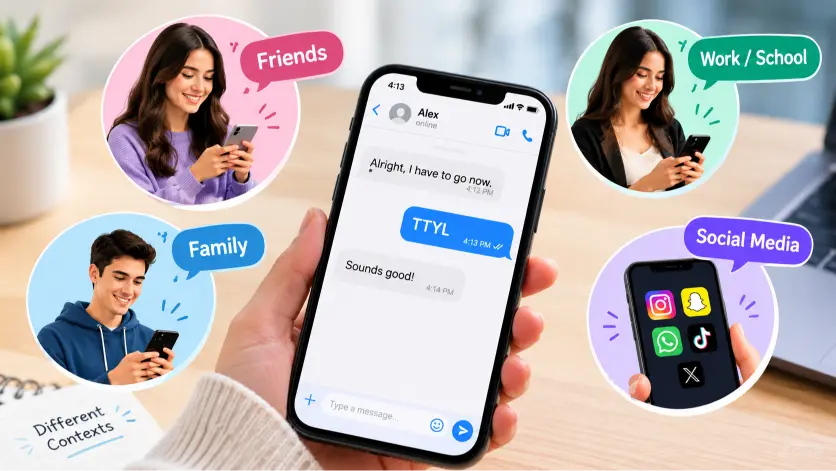
The way people use TTYL shifts significantly depending on the environment. In a casual setting between close friends, the phrase is entirely neutral. It is simply a functional tool used to exit a text thread.
However, the tone can change depending on how the conversation was going. If a discussion was particularly engaging, adding TTYL signals a reluctant departure; if the conversation had run its course, it acts as a polite exit strategy.
Social media platforms like Twitter or Facebook Messenger have also adopted this shorthand. In these spaces, it often appears in direct messages or as a concluding remark in a comments section. In a professional context, however, the usage becomes much more nuanced.
While TTYL is widely recognized, it is generally considered too informal for corporate emails or official business correspondence. Using it with a manager or a client might come across as unprofessional or dismissive.
It is best reserved for internal communication channels like Slack or Microsoft Teams, where the culture is more relaxed and peer-to-peer communication is common.
Specific Nuances of What Do TTYL Mean in Text on Social Platforms
Different platforms have their own subcultures, and the way users interpret shorthand can vary. On WhatsApp, where conversations are often one-on-one and highly personal, TTYL is a common way to end a long exchange. It feels intimate enough to be friendly but brief enough to avoid a dragged-out goodbye.
Instagram and TikTok introduce a different dynamic. On these platforms, interaction is often driven by visual content rather than text. If you are chatting with someone in the DMs (direct messages) on these apps, TTYL might be used when someone is switching from a text conversation to watching videos or posting content.
It serves as a “pause” button on the chat. Interestingly, on TikTok, some users have adopted variations of TTYL to fit the platform’s fast-paced, trend-driven nature. You might see it used in combination with other emojis to soften the blow of leaving, such as “ttyl! 👋” to ensure the recipient doesn’t feel ignored or rejected.
Analysis of Digital Shorthand in Technical Fields
While TTYL is a staple of social communication, it does not hold a formal place in technical fields such as physics, medicine, or aviation. In these high-stakes environments, clarity and precision are paramount.
Abbreviations in these sectors are strictly standardized to prevent life-threatening misunderstandings. For example, in aviation, the phonetic alphabet and specific codes are used to ensure the pilot and air traffic control are always on the same page.
Using informal slang like TTYL in these contexts would be considered highly inappropriate and potentially dangerous. The International Organization for Standardization works to ensure that terminology is consistent globally, which is the polar opposite of the evolving, informal nature of internet slang.
While a doctor might use TTYL in a text to a colleague about lunch plans, they would never use it in a patient chart or a medical report. It is vital to distinguish between the language we use for social bonding and the rigorous, unambiguous language required for professional and scientific accuracy.
Common Misconceptions
One of the most frequent misconceptions is that TTYL carries a hidden, negative meaning. Because text lacks tone, people sometimes read too much into the brevity of the phrase.
A recipient might ask themselves if the sender is angry or bored, simply because they ended the conversation abruptly. In reality, TTYL is almost always a sign of a busy schedule rather than a lack of interest.
Another common myth is that TTYL is an outdated term. While it originated in the nineties, it has successfully transitioned into the modern era. Some critics argue that newer generations have abandoned older acronyms for newer ones, but the data suggests otherwise.
TTYL remains a high-frequency term because it perfectly encapsulates a specific human need: the need to disconnect without being rude. It is not a sign of “old” internet culture; it is an efficient, timeless tool for managing digital presence.
Similar Terms and Alternatives
The English language is rich with ways to say goodbye, and the digital world has created a variety of alternatives to TTYL. Depending on the level of formality or the specific situation, you might choose a different acronym or a short phrase.
- BRB: Used when you are leaving the chat for a very short period, like grabbing a glass of water.
- GTG: Short for “got to go,” which sounds slightly more urgent than TTYL.
- AFK: “Away from keyboard,” often used in gaming to indicate you are still logged in but not watching the screen.
- CYA: A very casual, slang-heavy way to say “see you.”
- BBL: “Be back later,” which is very similar to TTYL but focuses on the return rather than the talk.
These terms offer different levels of urgency and intimacy. Choosing the right one depends on your relationship with the person on the other end.
How to Appropriately Respond to TTYL
When someone sends you TTYL, the best response is usually simple and brief. You don’t need to write a paragraph in return.
A simple “Sounds good,” “Talk soon,” or even just an emoji like a wave or a thumbs-up is perfectly sufficient. The purpose of their message was to exit, so a short reply respects that boundary.
If you are particularly close to the person, you might add a small detail to keep the connection warm, such as “Talk soon, have a great meeting!” or “Catch you later!” The goal is to show that you understand they are busy and that you are perfectly fine with the pause in conversation. Responding too lengthily might force them to stay engaged when they are trying to step away, which defeats the purpose of them using the abbreviation in the first place.
Differences Between TTYL and Similar Terms
It is helpful to distinguish between TTYL and other phrases that might seem identical but carry different implications. The chart below highlights how these terms differ in usage and tone.
| Term | Meaning | Tone | Best Use Case |
|---|---|---|---|
| TTYL | Talk to you later | Casual/Neutral | General social chat |
| GTG | Got to go | Urgent/Direct | When leaving for an appointment |
| BRB | Be right back | Temporary | Brief interruptions |
| TC | Take care | Affectionate | Ending a long conversation |
As seen in the table, the distinction often lies in the urgency and the expected timeline of the next interaction. TTYL is the most versatile, making it the most common.
Relevance in Modern Online Conversations and Dating
In the world of dating apps, TTYL can be a double-edged sword. On one hand, it is a polite way to end a chat session if the conversation has hit a lull or if you genuinely have other things to do.
On the other hand, it can sometimes be used as a “soft ghosting” tactic, where someone uses it to end a conversation they have no intention of restarting.
However, do not let that make you cynical. Most people use it exactly as intended: to manage their time. In dating, where the pressure to keep a conversation going is high, TTYL can actually be a healthy tool.
It shows that you have a life outside of the app and that you are not glued to your phone waiting for a notification.
It keeps the interaction light and prevents the dreaded “chat fatigue” that often leads to people deleting dating apps altogether. Used correctly, it keeps the spark alive by ensuring that when you do talk, you have something fresh to say.
FAQs
1. What does TTYL mean in texting?
TTYL stands for “Talk to You Later.” It is used to end a conversation when someone plans to talk again later.
2. What does TTYL mean from a girl?
When a girl texts TTYL, she usually means she will talk to you later. It is often a friendly and casual way to end a conversation.
3. What does TTYL mean from a guy?
When a guy sends TTYL, he usually means he needs to leave the conversation but may talk to you again later.
4. Is TTYL rude or friendly?
TTYL is generally friendly and informal. It is a common way to say goodbye in text messages and online chats.
5. How do you reply to TTYL?
You can reply with “Okay, talk later,” “Sure, see you,” “Catch you later,” or simply “Bye!”
6. What is the difference between TTYL and BRB?
TTYL means “Talk to You Later,” while BRB means “Be Right Back.” TTYL usually ends the current conversation, whereas BRB suggests a short break.
7. Can I use TTYL on social media?
Yes. You can use TTYL on Instagram, Snapchat, WhatsApp, TikTok, and other messaging platforms.
Conclusion
Mastering the nuances of digital shorthand is an essential skill for anyone participating in modern conversations. Understanding what do ttyl mean in text provides you with more than just a definition; it gives you insight into the social expectations of digital environments.
By recognizing that these terms are tools for efficiency and boundary-setting rather than signs of rudeness or disinterest, you can navigate your social media interactions and personal messaging threads with much greater confidence.
As communication continues to evolve, the way we use these abbreviations will likely shift as well, but the core human need for quick, polite, and effective exit strategies will remain constant.
Whether you are texting a close friend, chatting on a professional platform, or meeting someone new on a dating app, keeping your communication clear and respectful is the key to maintaining strong connections.
Next time you see TTYL pop up on your screen, you can rest easy knowing it is just a simple, polite way to keep the conversation flowing at a comfortable pace.